
Last updated September 25, 2026
Seasonal ADU Care for North Hollywood: Year-Round Homeowner’s Guide
A mini-split heat pump rated for North Hollywood’s climate zone 9 loses 15-20% efficiency when its coils are coated with one season’s worth of San Fernando Valley particulate. That’s a $40 coil cleaning that prevents a $3,200 compressor replacement. Most ADU maintenance guides ignore this because they’re written for temperate climates, not for the San Fernando Valley’s triple-digit summers, Santa Ana wind events, and January freeze snaps - which is why we built a more complete ADU Design & Permitting Maintenance Checklist for North Hollywood Homeowners. This guide covers what to inspect, when to inspect it, and what documentation to keep so your ADU’s systems - and your warranty coverage - stay intact year-round in North Hollywood.
Quick Answer
North Hollywood ADU owners should follow a four-season maintenance calendar: clean mini-split coils and clear condensate lines before July heat peaks; inspect roofing and seal exterior penetrations before October Santa Ana winds; insulate slab-edge plumbing before January freezes; and check foundation perimeters for moisture intrusion during the February-March rain window. Annual documentation of this work protects warranty coverage under design-build contracts.
Table of Contents
- Summer Heat Prep: July-September Mini-Split and Ventilation Service
- Santa Ana Wind Season: October-November Exterior Inspection
- Winter Cold Snap: January Freeze Protection for Plumbing
- Rain and Moisture Check: February-March Foundation Perimeter
- Annual Documentation That Protects Your Warranty
- ADU Type Differences: Garage, Detached, and Junior ADU Maintenance
- What Seasonal ADU Maintenance Costs in North Hollywood
- Common Mistakes to Avoid
- When to Call a Professional
- Frequently Asked Questions
Summer Heat Prep: July-September Mini-Split and Ventilation Service
North Hollywood sits in California climate zone 9, where cooling degree days exceed heating degree days by a wide margin. An ADU’s mini-split heat pump works harder here than in coastal Los Angeles, and the San Fernando Valley’s particulate load - dust, pollen, and fine debris from the surrounding hills - coats condenser coils faster than most owners realize.
We’ve measured the difference on units we’ve serviced. A coil with one season’s buildup in North Hollywood runs head pressure 15-20% higher than clean spec. The compressor compensates by drawing more amperage, shortening its lifespan and spiking your DWP bill. A $40 foaming cleaner and fin comb, or a $120-$180 professional coil service, prevents a $2,800-$3,500 compressor replacement.
Here’s what to inspect before July heat peaks:
- Outdoor condenser coil cleaning. Power down the unit. Remove the fan cage if accessible. Apply foaming cleaner, let it dwell, rinse gently with a hose - never pressure wash, which folds the aluminum fins. Straighten bent fins with a fin comb. In North Hollywood, we see cottonwood and ash particulate from the Los Angeles River corridor clogging coils especially fast.
- Refrigerant line inspection. Check the insulated suction line for cracks or UV degradation. The line set on a detached ADU often runs exposed across a yard; sun exposure here is more severe than shaded coastal zones. Bubbling at flare fittings or oil staining indicates a leak that needs professional recovery and recharge.
- Condensate line clearance. The condensate drain on a mini-split’s wall-mounted head terminates through the wall or into a pump. Algae and dust buildup in North Hollywood’s dry heat can form a hard plug. Blow through the line with a wet/dry vac or compressed air. A backed-up condensate line trips the unit and can overflow into drywall.
- Filter replacement or cleaning. Washable filters need monthly rinsing in peak season; disposable filters every 6-8 weeks. The Haven Standard requires a documented photo record of filter condition on every maintenance visit - clients receive the image, not a verbal “it looked fine.”
- Programmable thermostat audit. Verify the schedule matches actual occupancy. An unoccupied ADU cooling to 72°F all day in July wastes roughly $80-$120 monthly on a typical 400-square-foot unit in North Hollywood’s rate tier.
Ventilation deserves equal attention. ADUs under 2019 California energy code require balanced mechanical ventilation or exhaust-only with make-up air. The bath fan and range hood in a compact ADU work continuously. Check for lint and grease buildup on fan blades and dampers. A seized damper on an HRV or ERV unit in July heat means the unit either overworks or shuts down entirely.
For garage conversion ADUs in North Hollywood, pay special attention to the existing garage door’s weatherstripping if it was retained as a secondary entry. The gap under a non-insulated door dumps conditioned air and lets in superheated air from the driveway. A brush seal or replacement threshold runs $25-$60 and pays for itself in one billing cycle.
Santa Ana Wind Season: October-November Exterior Inspection
The Santa Ana wind season in North Hollywood typically runs October through November, with gusts exceeding 50 mph and sustained winds in the 25-35 mph range. These are dry, compressively heated winds that drive debris against structures and exploit any exterior weakness. For detached ADUs and garage conversions with new exterior walls, this is the highest-risk window for moisture intrusion and structural damage.
We’ve inspected ADUs in the Valley Village and NoHo Arts District neighborhoods where wind-driven sand and organic debris had eroded exterior sealant at roof-wall junctions in a single season. The damage was invisible from the ground until the following rainy season, when water tracked behind the WRB - water-resistive barrier, the house wrap or fluid-applied membrane beneath your siding.
Pre-wind-season checklist for North Hollywood ADU exteriors:
- Roofing and flashing. Walk the perimeter with binoculars or a drone. Look for lifted shingles at the rake edges, cracked mastic at plumbing vent boots, and gaps where the ADU roof meets any existing structure. On new detached ADUs in North Hollywood, check that ridge vent end caps are secure - Santa Ana gusts rip unsecured caps off and drive rain straight into the attic.
- Vent screens and louvers. Dryer vents, soffit vents, and combustion air intakes collect wind-driven debris. A blocked dryer vent is a fire hazard; a blocked soffit vent traps attic heat and voids most roofing material warranties. We specify stainless steel mesh on our ADU vents, not plastic louvers that embrittle in UV.
- Exposed wood and sealant joints. Any exposed rafter tails, fascia, or trim on a detached ADU needs intact paint or solid stain. Check sealant at window and door perimeters, especially on south and west exposures that take the brunt of afternoon sun and wind. We use OSI Quad or equivalent neutral-cure sealants on our builds; consumer-grade silicone often fails within 18 months here.
- Skirt and perimeter enclosure on pier foundations. Detached ADUs on raised floors need intact rodent screening and weather-resistant skirt panels. Santa Ana winds tear loose lattice and deposit debris underneath, creating harborage. Tuff Shed and similar accessory structures converted to ADU use often have this vulnerability if the skirt was not upgraded during permitting.
- Gutters and downspouts. Even brief October rain bands ahead of Santa Anas test your drainage. Clear leaves from valley oaks and neighbor’s trees. Verify downspouts terminate away from the ADU foundation, not against slab edges where hydrostatic pressure drives moisture through concrete.
James Hardie fiber-cement siding, which we specify on many North Hollywood detached ADUs for fire resistance and dimensional stability, holds paint longer than wood in this wind-and-UV environment. But the caulking at butt joints and trim interfaces still needs annual inspection. A $12 tube of sealant now prevents $800-$1,500 in siding repair later.
Winter Cold Snap: January Freeze Protection for Plumbing
North Hollywood’s average January low is 44°F, but radiational cooling on clear nights can drop below 28°F for 4-6 hours - enough to freeze unprotected water lines. The risk is not theoretical. In January 2007 and again in January 2013, the San Fernando Valley saw hard freeze conditions that burst pipes across the region.
ADU plumbing is especially vulnerable for two reasons specific to how these structures are built in North Hollywood. First, many garage conversion ADUs retain the original slab with plumbing run along the slab edge or in the stem wall, exposed to exterior air on two faces. Second, detached ADUs often have long service line runs from the main house, with hose bib or irrigation tees that trap water if not properly sloped.
Freeze protection for North Hollywood ADU plumbing:
- Insulate slab-edge runs. PEX or copper lines running through a garage conversion’s stem wall or along the exterior of a detached ADU’s slab need minimum R-4 insulation in climate zone 9. We use armaflex or closed-cell pipe insulation with UV-resistant jacketing on exposed runs. The insulation must extend 12 inches into conditioned space, not just cover the exterior portion.
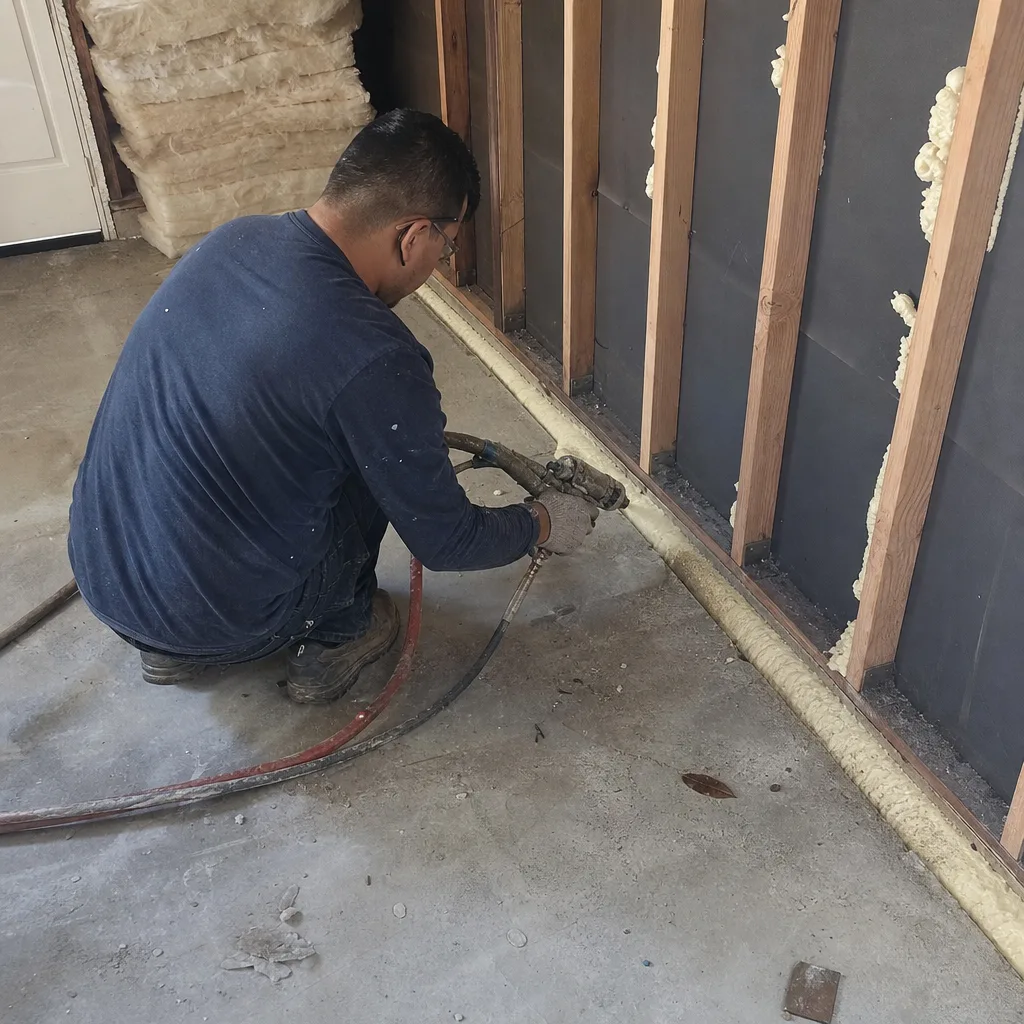
- Seal penetrations. Where plumbing enters through slab or stem wall, seal the annular space with expanding foam rated for exterior use. Wind infiltration through a 1/4-inch gap around a pipe strips heat from the line faster than still air at the same temperature.
- Drain hose bibs and irrigation lines. Any hose bib serving the ADU yard needs a frost-free sill cock with the valve seat inside conditioned space, or manual shutoff and drain inside. Irrigation lines tee’d off the ADU service must have a manual drain valve or be blown out with compressed air. We document the location of these valves on every ADU as-built drawing we deliver.
- Maintain minimum thermostat setting. Even in an unoccupied ADU, set the thermostat to 55°F minimum. The cost of heating a well-insulated 400-square-foot ADU to 55°F in North Hollywood runs roughly $25-$40 monthly in January - far less than emergency pipe repair and water damage remediation.
- Know your main shutoff location. Every ADU we build has a dedicated shutoff valve at the meter or service entrance, clearly labeled. If a pipe does freeze and split, minutes matter. The photo record in your project documentation shows exactly where this valve is.
Under Haven Standard Clause 5 (No Surprises), any plumbing insulation upgrade identified during your pre-winter inspection is quoted in writing before work starts - not added as a change order when the crew is already on site.
Rain and Moisture Check: February-March Foundation Perimeter
North Hollywood’s rainy season is short but concentrated: most annual precipitation falls between December and March, with February and March bringing the heaviest individual storm events. For ADU foundations, this is the window when moisture intrusion reveals itself - and when early intervention prevents structural damage.
The San Fernando Valley’s soil is predominantly sandy loam and clay loam, with variable expansion characteristics. In the flat areas south of Victory Boulevard, clay content is higher; north toward the foothills, drainage is faster but slopes are steeper. An ADU foundation that performed fine in dry months may show distress during the first sustained wet period.
What to inspect around your ADU foundation during February-March rains:
- Standing water or soggy soil within 6 feet of the slab. Persistent saturation indicates a grading or drainage problem. The finished grade should slope away from the ADU at minimum 5% for 10 feet. On tight North Hollywood lots where 10 feet isn’t possible, we specify French drains or slot drains tied to daylight or storm systems.
- Efflorescence on slab edges or stem walls. The white powdery deposit is mineral salts left by evaporating moisture. It means water is moving through the concrete matrix. Light efflorescence is cosmetic; heavy, recurring efflorescence with spalling (surface flaking) signals active moisture penetration that can reach framing.
- Musty odor in interior corners or closets. ADUs have less air volume than primary residences; moisture concentrates faster. A musty smell in a ground-level ADU during February rains often traces to slab vapor transmission, not roof leaks. We specify 6-mil polyethylene vapor barriers under all slab-on-grade ADUs; retrofits may need topical moisture mitigation.
- Baseboard staining or drywall swelling at bottom plates. This is advanced warning. The moisture has reached the wood sill plate or bottom stud. In North Hollywood’s climate, mold growth follows within 48-72 hours of wood moisture content exceeding 20%.
- Exterior door and window operation. Wood frames swell with moisture; doors that stuck in February but freed in May indicate seasonal moisture cycling at the rough opening. The sealant or flashing detail has likely failed.
For ADU design and permitting in North Hollywood, we specify capillary breaks at all slab-to-wall intersections and use pressure-treated bottom plates on any framing within 12 inches of finished grade. These are not code minimums everywhere; they’re Haven Standard requirements based on what we’ve documented in 900+ ADU projects since 2015.
If you observe any of these signs, photograph them with date stamps. Warranty claims - whether on our work or on manufacturer warranties for materials like James Hardie siding or Abodu modular components - require documented evidence of the condition and its progression.
Annual Documentation That Protects Your Warranty
Every ADU we build at Ellery ADU Studio North Hollywood is delivered with three documents: the permitted construction set, a photo record of all concealed conditions found during construction, and the Haven Standard warranty with its 365-Day Done Right Promise. But warranty coverage is not automatic - it requires the owner to maintain the structure and to document that maintenance.
Here’s what to keep, and why it matters:
- Permit final inspection sign-off. The Certificate of Occupancy or final inspection approval from LADBS (Los Angeles Department of Building and Safety) establishes the baseline condition. Keep the original and a cloud backup. If a dispute arises about whether a condition existed at move-in, this document controls.
- Annual maintenance photo record. Date-stamped photos of coil cleaning, filter changes, sealant condition, and drainage function. We provide a template checklist to our clients; completed, it satisfies the “reasonable maintenance” clause in most manufacturer warranties.
- Utility bills for the ADU meter or sub-meter. A spike in summer cooling costs without changed usage patterns often precedes equipment failure by one to two seasons. The data supports a warranty claim that the unit was operating within design parameters before the failure.
- Professional service invoices. Any HVAC, plumbing, or roofing work should include a written scope, materials used, and technician license number. In California, CSLB-licensed contractors must provide this; if a vendor won’t, that’s a signal to use someone else.
- Correspondence with the builder or manufacturer. Email creates a timestamped record of reported issues. For modular systems like Abodu or Cover, the manufacturer warranty runs parallel to the builder warranty; knowing which entity is responsible for which component prevents delay.
The 365-Day Done Right Promise covers defects in workmanship - the ADU not built to the permitted drawings. It does not cover owner-neglected maintenance. A mini-split compressor that fails because coils were never cleaned is a maintenance issue, not a workmanship defect. The photo record you keep makes that distinction clear.
Under Haven Standard Clause 1, the written price before work starts includes a line item for the documentation package. There is no separate charge for the as-built drawings, photo record, or warranty document. They’re part of the core deliverable, not an upsell.
ADU Type Differences: Garage, Detached, and Junior ADU Maintenance
Not all ADUs in North Hollywood share the same maintenance profile. The structure type determines which systems are exposed, which are shared with the primary residence, and where the failure points concentrate.
Garage Conversion ADUs retain the original slab, roof structure, and often one or two original walls. The maintenance priorities are:
- Slab-edge plumbing insulation, as the original garage slab rarely has perimeter insulation.
- Roof ventilation balance - garage roofs were often unvented or poorly vented; the conversion may need added soffit or ridge vent area to prevent summer attic heat buildup.
- Fire separation at the ceiling and walls if the garage door was retained; the fire-rated drywall or intumescent sealant needs annual inspection for damage or penetrations.
New Detached ADUs have the most exposed surface area and the most systems to maintain:
- Full exterior envelope inspection pre-Santa Ana season.
- Dedicated electrical service and grounding; check the panel for moisture intrusion at the conduit entry.
- Independent sewer lateral to the main line; tree root intrusion in North Hollywood’s mature neighborhoods is common.
- Pier foundation skirt and rodent screening, if applicable.
Junior ADUs (JADUs) are interior conversions within the primary residence, sharing walls and often HVAC. Maintenance overlaps with whole-house care but adds:
- Separate meter or sub-meter accuracy verification.
- Independent egress window or door operation; the EERO (emergency escape and rescue opening) must open without tools or keys.
- Sound separation assembly inspection if the JADU shares a bedroom wall with the primary unit.
We cover all five ADU types - Ellery ADU Studio North Hollywood handles ADU Design & Permitting, Garage Conversion ADU, New Detached ADU, Junior ADU & Interior Conversion, and ADU Site Prep & Utilities - under one contract with one written price. The maintenance guidance we provide at project closeout is specific to the type built, not a generic handoff.
What Seasonal ADU Maintenance Costs in North Hollywood
These ranges reflect what we see quoted by qualified, licensed vendors in the San Fernando Valley market. Every project we quote includes a written price before work starts, per Haven Standard Clause 1. Use these figures to evaluate any estimate you receive.
| Service | Typical Range | Frequency |
|---|---|---|
| Mini-split coil cleaning (professional) | $120-$180 | Annual, before July |
| DIY coil cleaning (materials only) | $25-$45 | Annual |
| Mini-split refrigerant leak repair and recharge | $650-$1,200 | As needed |
| Compressor replacement (full system) | $2,800-$3,500 | Failure only |
| Exterior sealant replacement (typical ADU) | $180-$400 | Every 3-5 years |
| Roof inspection and minor flashing repair | $250-$550 | Annual, pre-Santa Ana |
| Plumbing insulation (slab-edge run, materials + labor) | $200-$450 | One-time or retrofit |
| French drain installation (tight lot) | $1,800-$3,500 | As needed |
| Documented photo record service visit | $150-$250 | Annual |
The cost of deferred maintenance is always higher. A $120 coil cleaning skipped for three years contributes to compressor failure at 15 times the cost. A $300 sealant repair ignored until water reaches the sill plate becomes $4,000-$8,000 in framing, insulation, and interior finish replacement.
We offer a Free Second Opinion on any written estimate for ADU maintenance or repair work in North Hollywood. Bring us the scope and price; we’ll review it against what the condition actually requires and what the documentation should include. No obligation - the Haven Standard applies to advice as much as to construction.
Common Mistakes to Avoid
- Assuming a new ADU needs no maintenance for five years. Even a 2024 build with new systems needs annual coil cleaning and sealant inspection in North Hollywood’s climate. Warranty coverage does not replace owner maintenance.
- Pressure-washing mini-split condenser coils. The aluminum fins fold at 30 psi; a pressure washer at 1,500 psi destroys them. Use foaming cleaner and gentle rinse only.
- Ignoring the ADU during primary residence maintenance visits. Your HVAC tech may service the main house unit and never look at the ADU mini-split. Specify both units on every service call.
- Sealing attic vents to “improve efficiency.” Blocked ventilation traps moisture and superheats the roof deck. In North Hollywood, this accelerates shingle degradation and can void manufacturer warranties.
- Using interior-grade caulk on exterior ADU joints. Siliconized acrylic latex fails within one season of UV and wind exposure. Use neutral-cure silicone or polyurethane sealant rated for exterior exposure.
- Waiting for visible water damage before inspecting. By the time drywall stains appear, framing has been wet for weeks or months. Inspect during active rain, not after it stops.
- Discarding builder documentation after move-in. The permit set, photo record, and warranty are your evidence if a defect claim arises. Store them with your property records, not in the ADU where a tenant might misplace them.
When to Call a Professional
Call a licensed contractor or specialist when you find refrigerant leaks (oil staining, bubbling, or pressure loss), structural movement (cracks wider than 1/8 inch that grow seasonally), electrical panel moisture or corrosion, or any mold growth larger than 10 square feet. These conditions involve safety hazards or code compliance issues that owner maintenance cannot address.
Ellery ADU Studio North Hollywood offers free estimates for ADU maintenance assessments, warranty claim documentation, and repair scoping. A live person answers calls 24/7 - no voicemail queue. Call (424) 407-8266 to schedule. We’ll provide a written scope and price before any work begins, with a documented photo record of what we find.
Frequently Asked Questions
Annual preventive maintenance for a typical 400-600 square foot ADU in North Hollywood runs $400-$800 if you perform coil cleaning and basic inspections yourself, or $800-$1,400 if you use professional service for HVAC, roofing, and plumbing checks - see our ADU Cost Breakdown: The North Hollywood Homeowner’s Reference for 2026 for line-item detail. Major repairs deferred by skipped maintenance run $3,000-$8,000. Call (424) 407-8266 for an exact scope and written price on your specific ADU.
Manufacturer warranties on mini-split compressors typically cover defects in materials and workmanship for 5-10 years, but exclude failures caused by lack of maintenance. If you cannot produce evidence of annual coil cleaning and filter service, the manufacturer may deny the claim. The Haven Standard’s 365-Day Done Right Promise covers our workmanship, not owner-neglected maintenance - which is why we emphasize documentation.
North Hollywood’s inland location in the San Fernando Valley brings triple-digit summer heat, colder winter radiational cooling, higher particulate load from surrounding hills, and stronger Santa Ana wind events. These factors accelerate HVAC coil fouling, increase thermal cycling on sealants and roofing, and create freeze risk that coastal zone 10 properties rarely face. ADU systems specified for generic “Los Angeles” conditions often underperform here.
Signs of slab moisture transmission include efflorescence (white mineral deposits), musty odors that worsen in humid months, and flooring adhesive failure or warping. A calcium chloride test or in-situ relative humidity test, performed by a flooring or restoration professional, quantifies the moisture emission rate. Retrofit solutions include topical epoxy sealers or floating floor systems with vapor-resistant underlayment. We specify 6-mil poly under all new slabs to prevent this condition.
Under Haven Standard Clause 5 (No Surprises), the scope and price are locked at signing. If concealed conditions emerge - for example, a slab leak hidden below finished flooring - we document the finding with photos, quote the additional scope in writing, and obtain your approval before proceeding. There are no door-side upsells or verbal change orders.
Routine maintenance - coil cleaning, filter replacement, sealant touch-up, insulation retrofit - does not require permits. Work affecting structural, electrical, or plumbing systems may require LADBS permits depending on scope. We pull all required permits and schedule inspections as part of any repair contract, with permit costs itemized in the written price.
A live person answers calls 24/7. For non-emergency assessments, we typically schedule within 3-5 business days. Emergency conditions - active water intrusion, electrical hazard, or structural compromise - receive same-day response. Call (424) 407-8266; we’ll discuss the condition and dispatch appropriately.
The Bottom Line
North Hollywood’s climate demands a deliberate, season-specific maintenance calendar for ADUs: mini-split service before summer heat, exterior envelope inspection before Santa Ana winds, plumbing protection before January freezes, and foundation moisture monitoring during the February-March rain window. The cost of this preventive work is modest; the cost of deferring it is not. Document everything - photos, invoices, utility records - to protect warranty coverage and to establish baseline conditions if defects arise. For more guides & resources on ADU ownership in North Hollywood, visit our blog. The Haven Standard was built on what we’ve learned from 900+ ADU projects since 2015: evidence beats assurances, and a written price before work starts eliminates the friction that derails most construction relationships.
Written by Nadia Ellery, Owner at Ellery ADU Studio North Hollywood, serving North Hollywood since 2015.